2026 Chevrolet Colorado
The cited maximum for a 2026 Chevrolet Colorado is 7,700 lb conventional. Crew Cab, 2.7L TurboMax, 3.42 axle and 13,250 lb GCWR. 2WD requires Trailering Package; 4WD also requires limited-slip differential.
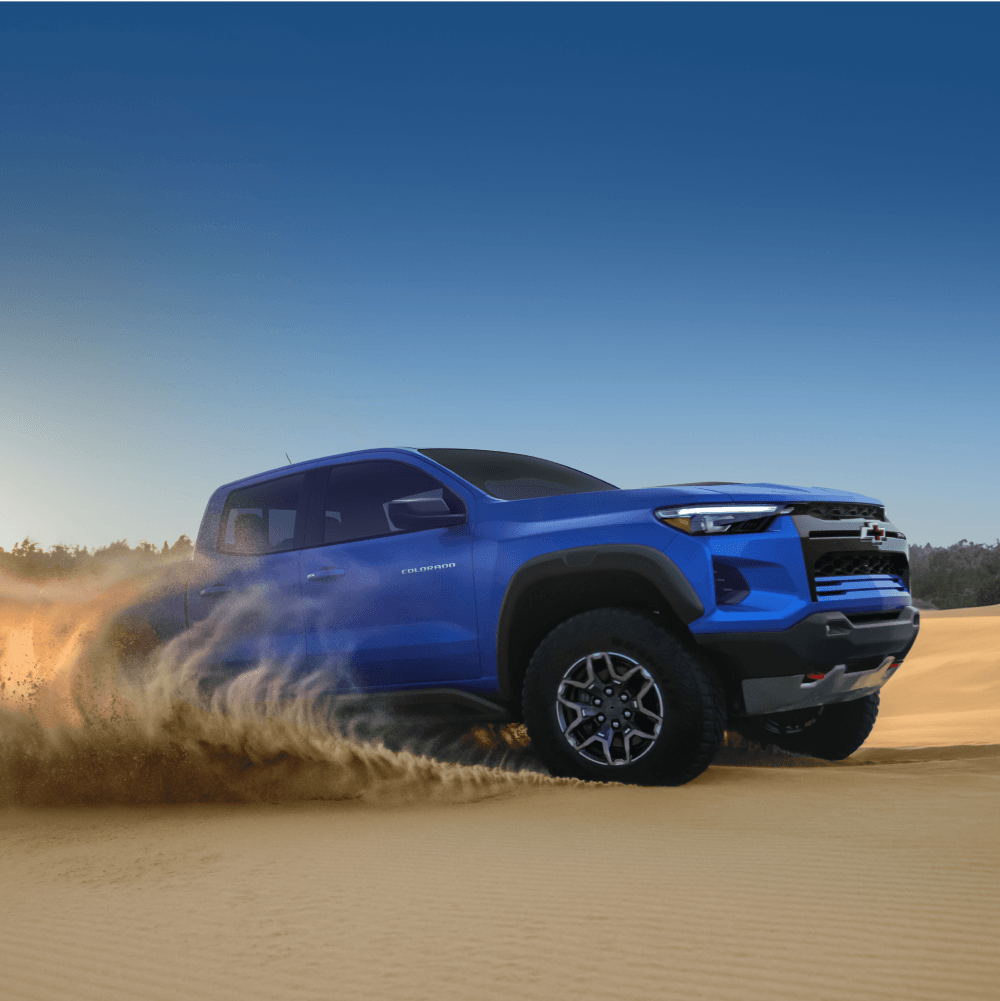
Pictured trim is identified in the caption. Ratings below may require a different configuration.
The build table for 2026 is not transcribed. This page will not multiply trims, cabs, and engines into trucks the order guide did not list.
| Hitch | Cited maximum | Configuration | Source grade |
|---|---|---|---|
| Conventional | 7,700 lb | Crew Cab, 2.7L TurboMax, 3.42 axle and 13,250 lb GCWR. 2WD requires Trailering Package; 4WD also requires limited-slip differential. | OEM chart |
The OEM chart rates ZR2 at 6,000 lb. It does not show unpackaged or Bison ratings; those separate rows remain attributed to a secondary source.
Source: Chevrolet, 2026 Colorado Trailering. Visually reviewed. 2WD requires Trailering Package; 4WD additionally requires limited-slip differential. ZR2 is a separate 6,000 lb row. The source does not show a Bison row or an unpackaged base rating.
Spec sheet
12 of 25 fields cited; 1 estimate. Field index
Cited fields may cover selected trims or only part of a measurement. Read the configuration and source beside each value; a cited field does not mean every version is researched.
Towing
- Conventional maximum
- 7,700 lb. Crew Cab, 2.7L TurboMax, 3.42 axle and 13,250 lb GCWR. 2WD requires Trailering Package; 4WD also requires limited-slip differential.Chevrolet source
- Gooseneck maximum
- Not transcribed for this model year.
- Fifth-wheel maximum
- Not transcribed for this model year.
- Tongue or pin load
- 770 lb tongue at the 7,700 lb conventional maximum. Illustration at 10 percent conventional and 15 percent in-bed, not a measured load or recommendation. Follow the trailer and vehicle instructions; actual load may be higher.Estimate
- Weight distribution
- Not transcribed for this model year.
- Trailer frontal area
- Not transcribed for this model year.
Weights
- Payload
- Published maxima: WT / LT 1,710 lb (2WD), 1,700 (4WD); Trail Boss 1,570; Z71 1,590; ZR2 1,310. These are independent of maximum trailering.General Motors source — PDF pages 100, 120–121: Payload
- GCWR
- 13,250 lb (Crew Cab, Not specified in chart, 3.42); 11,600 lb (Crew Cab, Not specified in chart, 3.42)Chevrolet source · GM Authority source
- GVWR
- WT / LT: up to 6,050 lb (2WD), 6,250 lb (4WD). Trail Boss, Z71 and ZR2: up to 6,250 lb. Verify the certification label.General Motors source — PDF pages 100, 120–121: GVWR
- Front GAWR
- Not transcribed for this model year.
- Rear GAWR
- Not transcribed for this model year.
- Curb weight
- Not transcribed for this model year.
Body
- Wheelbase
- 131.3 in, Crew Cab with 5-ft box.General Motors source — PDF pages 100, 120–121: Wheelbase
- Bed length
- StandardGM Authority source
- Bed width and depth
- Not transcribed for this model year.
- Cab-to-axle
- Not transcribed for this model year.
- Overall length, width, height
- Length: WT 213 in; LT / Trail Boss / Z71 213.2; ZR2 212.6. Width and height are not listed in this overview.General Motors source — PDF pages 100, 120–121: Overall length, width, height
- Ground clearance and angles
- Not transcribed for this model year.
- Fifth-wheel clearance
- Not transcribed for this model year.
Power
- Engine, horsepower, torque
- TurboMax: 310 hp / 430 lb-ft.General Motors source — PDF pages 100, 120–121: Engine, horsepower, torque
- Transmission
- 8-speed automatic.General Motors source — PDF pages 100, 120–121: Transmission
- Fuel type and tank
- Not transcribed for this model year.
- Drivetrain
- 2WD, 4WDChevrolet source · GM Authority source
- Axle ratio
- 3.42Chevrolet source · GM Authority source
- Tow package
- WT and LT require Z82 Trailering Package and G80 rear differential for the fleet table's 7,700 lb maximum. ZR2 has a lower 6,000 lb rating; follow its separate trailering chart.General Motors source — PDF pages 100, 120–121: Tow package
Bed, tongue weight, and wheelbase
The trailer rating is one limit. The bed has to fit the load, the tongue or pin has to fit in payload, and the wheelbase is the column the chart uses.
- An illustrative 10 percent of the 7,700 lb conventional maximum is 770 lb of tongue weight. This is not a measured load or recommended percentage; actual load may be higher.
Bed capacity · Tongue and pin weight · Wheelbase · GCWR, GVWR, and GAWR. The spec sheet above lists the sourced wheelbase information for this year. See the spec sheet for the sourced GCWR and its configuration.
Estimate payload margin and bed volume · How these limits work together
Change from 2025
- Conventional: 7,700 lb in 2025, 7,700 lb in 2026 (unchanged maximum, different source or equipment list).
Generation
Third generation
2026 is year 4 of this generation (2023–2026). One 2.7L turbocharged four-cylinder for every trim. The 2026 chart shows 3,500 to 7,700 pounds depending on trailering package, and lower ratings on ZR2 trims.
Configuration chart
These are transcribed cells, not the entire factory chart. A missing row is missing, not a zero.
| Trailer | Engine | Cab / bed | Drive | Axle / package | GCWR | Evidence |
|---|---|---|---|---|---|---|
| 7,700 lb Conventional | 2.7L TurboMax | Crew Cab, Not specified in chart | 2WD | 3.42 · Trailering Package | 13,250 lb | Chevrolet Page 1, TurboMax / 2WD, footnote 3 |
| 7,700 lb Conventional | 2.7L TurboMax | Crew Cab, Not specified in chart | 4WD | 3.42 · Trailering Package and limited-slip differential | 13,250 lb | Chevrolet Page 1, TurboMax / 4WD, footnote 4 |
| 7,700 lb Conventional | 2.7L turbo I4 | Crew Cab, Standard | 2WD | 3.42 · Advanced Trailering Package (ZL6) | — | GM Authority |
| 7,700 lb Conventional | 2.7L turbo I4 | Crew Cab, Standard | 4WD | 3.42 · Advanced Trailering Package (ZL6) | — | GM Authority |
| 7,700 lb Conventional | 2.7L turbo I4 | Crew Cab, Standard | 2WD | 3.42 · LT, Advanced Trailering Package | — | GM Authority |
| 7,700 lb Conventional | 2.7L turbo I4 | Crew Cab, Standard | 4WD | 3.42 · LT, Advanced Trailering Package | — | GM Authority |
| 7,700 lb Conventional | 2.7L turbo I4 | Crew Cab, Standard | 4WD | 3.42 · Trail Boss | — | GM Authority |
| 7,700 lb Conventional | 2.7L turbo I4 | Crew Cab, Standard | 4WD | 3.42 · Z71 | — | GM Authority |
| 6,000 lb Conventional | 2.7L TurboMax | Crew Cab, Not specified in chart | 4WD | 3.42 · ZR2 | 11,600 lb | Chevrolet Page 1, TurboMax ZR2 / 4WD |
| 6,000 lb Conventional | 2.7L turbo I4 | Crew Cab, Standard | 4WD | 3.42 · ZR2 | — | GM Authority |
| 5,500 lb Conventional | 2.7L turbo I4 | Crew Cab, Standard | 4WD | 3.42 · ZR2 Bison | — | GM Authority |
| 3,500 lb Conventional | 2.7L turbo I4 | Crew Cab, Standard | 2WD | 3.42 · Work Truck, no Advanced Trailering Package. | — | GM Authority |
| 3,500 lb Conventional | 2.7L turbo I4 | Crew Cab, Standard | 4WD | 3.42 | — | GM Authority |
| 3,500 lb Conventional | 2.7L turbo I4 | Crew Cab, Standard | 2WD | 3.42 · LT | — | GM Authority |
| 3,500 lb Conventional | 2.7L turbo I4 | Crew Cab, Standard | 4WD | 3.42 · LT | — | GM Authority |
What changes the number
- Engine and transmission
- Cab, bed, and wheelbase
- Two-wheel drive, four-wheel drive, or all-wheel drive
- Axle ratio and tow package
- Conventional hitch versus fifth-wheel versus gooseneck
- People, options, and cargo, which spend payload the chart assumed was empty
Questions
- How much can a 2026 Chevrolet Colorado tow?
- The cited maximum for a 2026 Chevrolet Colorado is 7,700 lb conventional. Crew Cab, 2.7L TurboMax, 3.42 axle and 13,250 lb GCWR. 2WD requires Trailering Package; 4WD also requires limited-slip differential.
- Did Colorado towing change for 2026?
- Compare the cited 2026 figures on this page with the 2025 record. They are stored separately.
- Which configuration hits the maximum?
- Crew Cab, 2.7L TurboMax, 3.42 axle and 13,250 lb GCWR. 2WD requires Trailering Package; 4WD also requires limited-slip differential.
- What tongue weight should I plan for a 2026 Colorado?
- At the cited 7,700 lb conventional maximum, an illustrative 10% assumption produces 770 lb of tongue weight. This is not a recommended percentage or a measurement; follow your trailer and vehicle instructions and measure the actual load. That load counts against payload and the rear axle rating.